Sogo Design... Ten years of focus on medical health the only track.
Cooperative customers: well-known confidential customers
Project Name: Design of Test Instrument for Moisture Evaporation Speed
Cooperation content: design analysis | appearance design | structural design | prototype production | accompanying running assistance
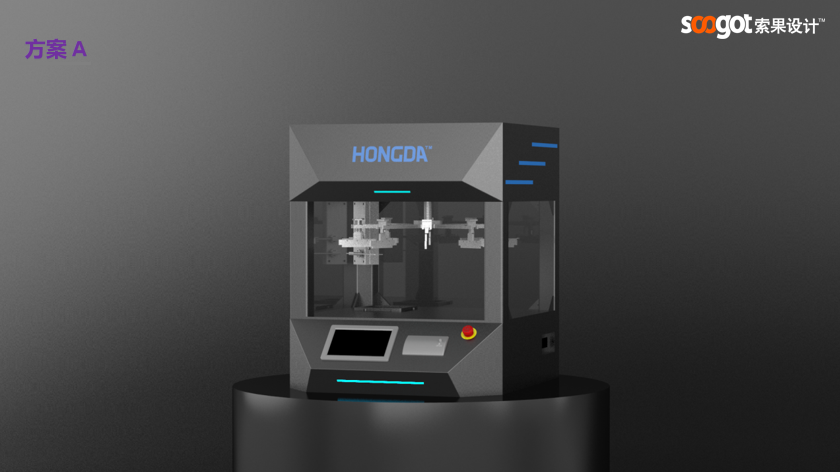
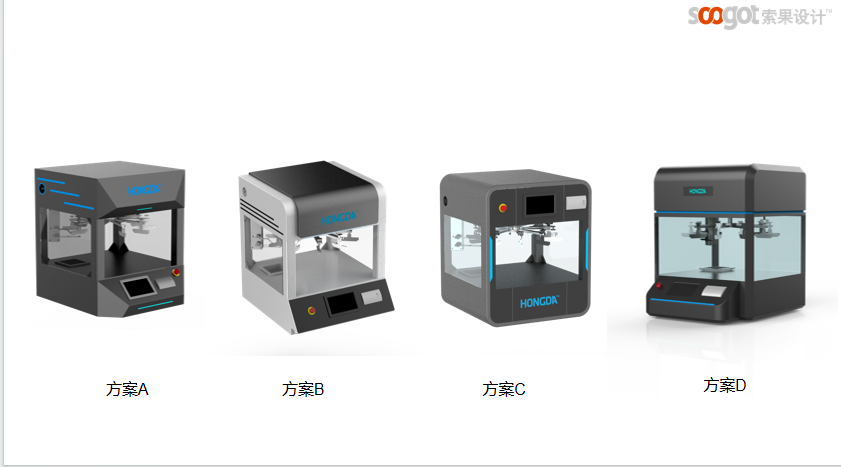
This is the four water evaporation rate test instrument schemes (A-D) designed and built by Suoguo. As laboratory equipment for the study of water evaporation characteristics of materials/samples, its design revolves around "the accuracy of the test process and the adaptability of the operation experience". It realizes the differentiated adaptation of different laboratory scenes in form, functional layout and details. It is the design sample of the integration of "functional rationality" and "scene subdivision" of scientific research instruments.
1. Design Analysis: Functional Modular Adaptation for Laboratory Testing
The core scenario of the water evaporation speed test is the accurate test of the material research and development, quality inspection and other laboratories, and the underlying logic of the four solutions is "test requirement priority" as the core:
Common features and differences of functional modules: all four schemes retain the core architecture of "test cabin (transparent observation area sample table), interactive control area (screen keys) and core test module (internal sensor)", and adapt to the test process of "placing samples → setting parameters → observing and recording evaporation process. The difference is in scene adaptation:
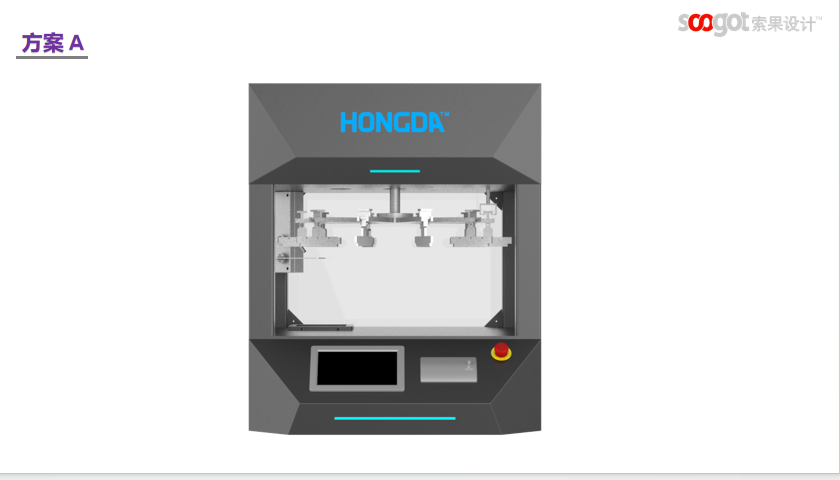
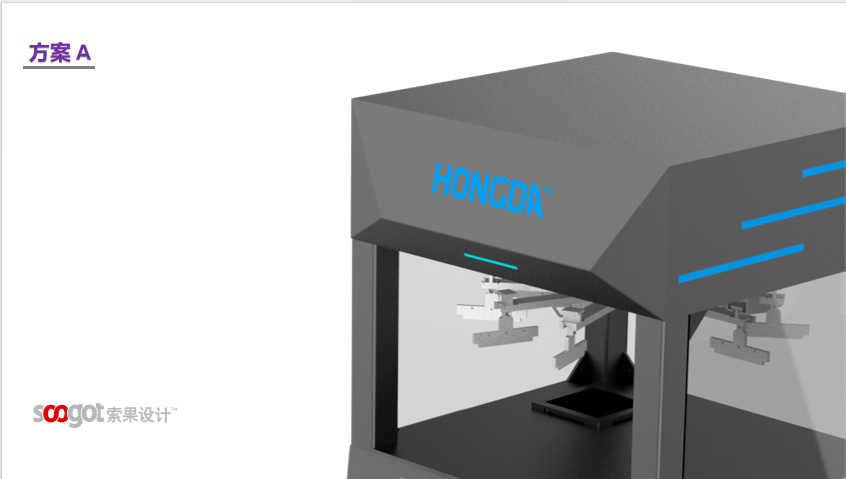
Scheme A (compact dark gray): suitable for "small laboratory/desktop test", compact size and space saving;
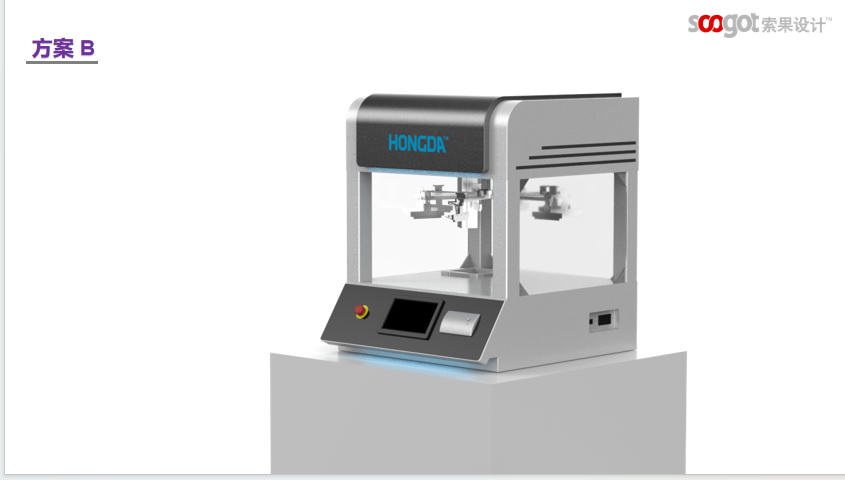
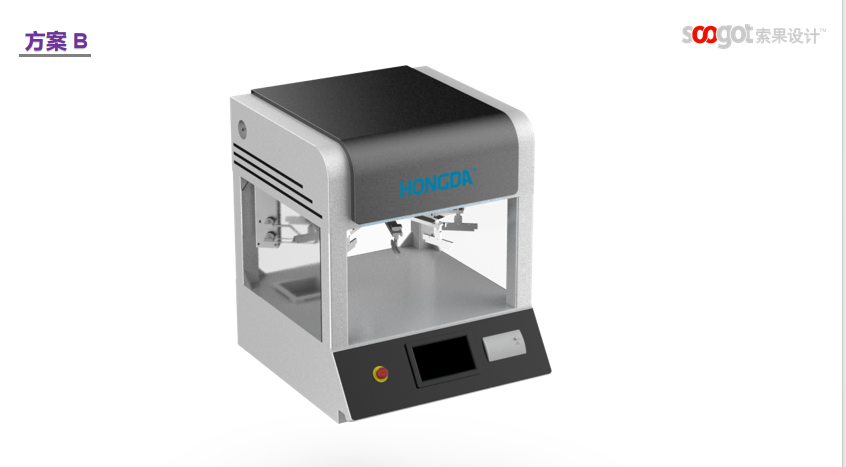
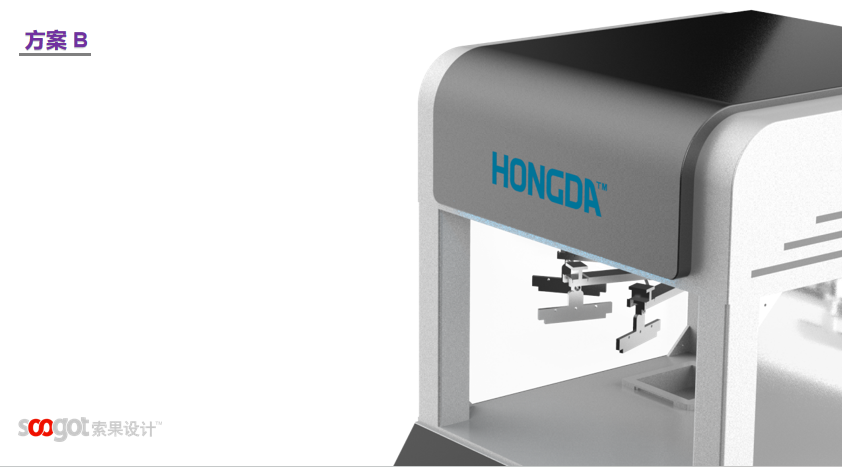
Scheme B (black and white simple): suitable for "routine quality inspection test", simple form is convenient for batch deployment;
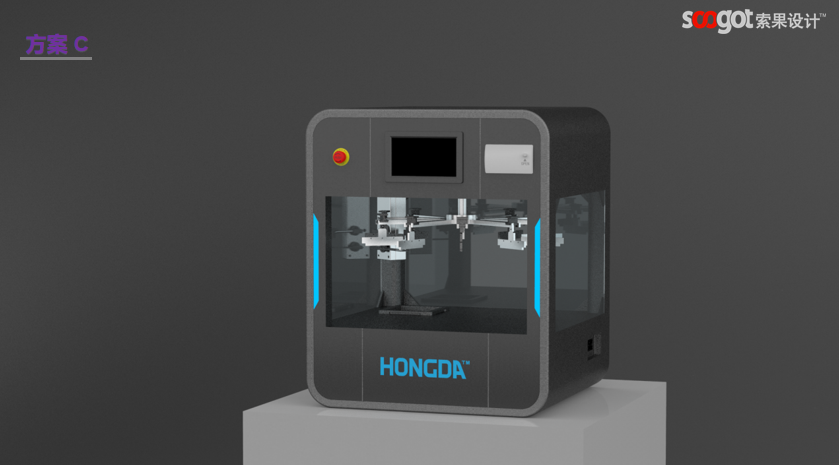
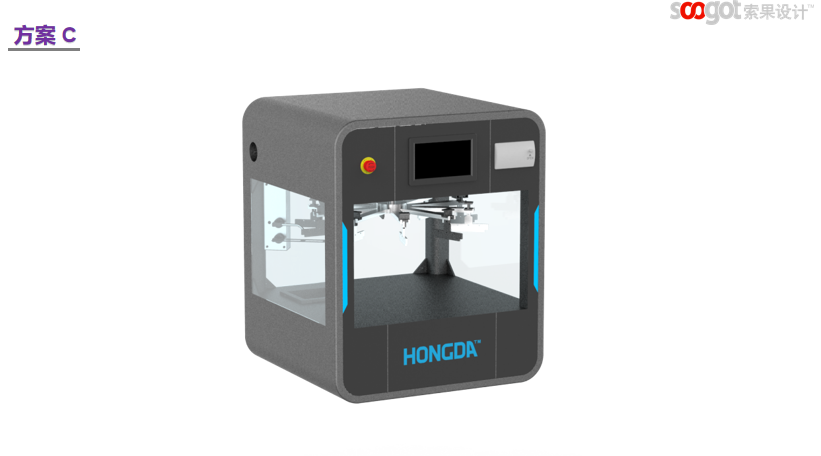
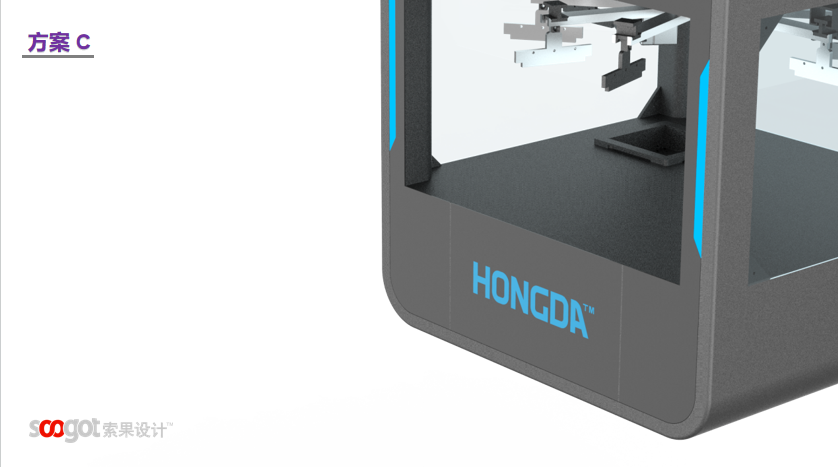
Scheme C (eye-catching mark): it is suitable for "batch comparison test", and the clear mark is convenient for sample grouping management;
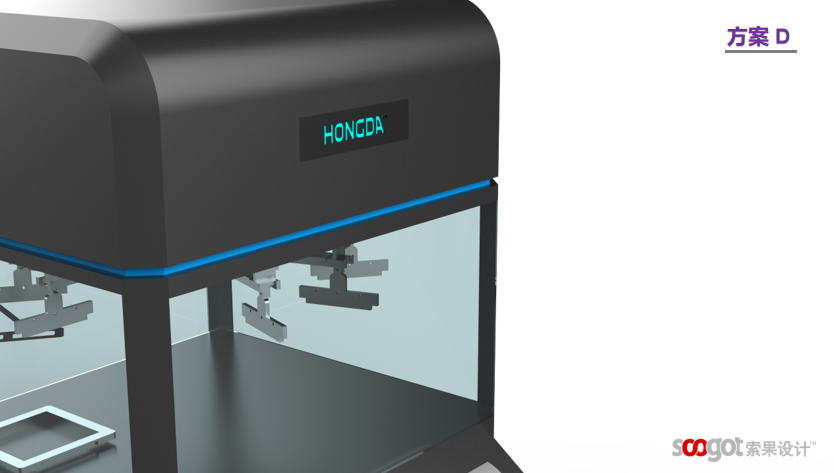
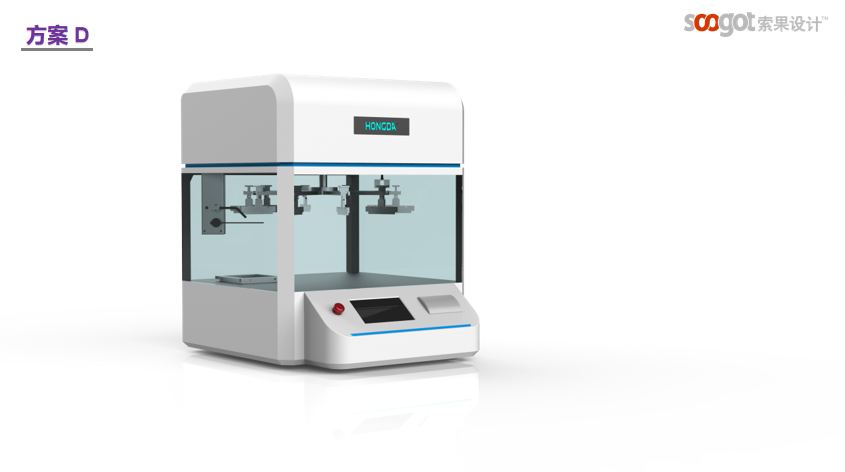
Scheme D (large cabin): suitable for "research and development level multi-sample test", large transparent cabin supports simultaneous observation of multiple samples.
Laboratory properties of materials: all adopt the combination of "metal shell with high permeability and transparent cabin"-the metal shell ensures the durability and easy cleaning of the equipment, which meets the requirements of high-frequency use in the laboratory. The highly permeable cabin allows testers to clearly observe the dynamic process of water evaporation and supports accurate recording of test data.
2. Design Language: Rational Scientific Aesthetics of Scientific Research Instruments
The design language of the four schemes is based on "rational and reliable", and the scene is adapted through detailed differentiation:
Commonality: sense of scientific and technological precision: form without redundant decoration, low saturation color (gray/black/white), conveying the "rigorous and objective" attribute of scientific research instruments, and avoiding visual interference with the concentration of testers.
Difference: Scenario expression:
Scheme A strengthens the "compact sense of technology" with "dark gray-blue lines" to adapt to the exquisite needs of small desktop spaces;
Scheme B uses "black and white color contrast" to convey "simple and professional sense" and adapt to the efficient atmosphere of conventional quality inspection;
Scheme C highlights "tool identification" with "eye-catching brand logo" and is suitable for sample management of batch testing;
Scheme D creates a "R & D-level professional sense" with a "large transparent cabin blue decorative strip" to adapt to the precise contrast scene of multiple sets of samples.
3. Design Details: Implicit Support for Test Accurate
The detailed design revolves around the "accuracy and safety of water evaporation test:
Details of the test cabin: the transparent cabins of the four schemes are all made of "high permeability and distortion-free materials" to avoid visual errors affecting the observation of the evaporation process; The sample table adopts "multi-station design" (especially scheme d) to support synchronous testing of multiple groups of samples and improve the accuracy of comparative data. The cabin body of some schemes is equipped with "sealed opening and closing structure", which can control the ventilation environment in the cabin, reduce the interference of external air flow on the evaporation rate of water.
Details of the interactive area: the interactive screen adopts "embedded anti-glare design" to adapt to the laboratory lighting environment and ensure clear parameter display; The key layout follows the principle of "operation frequency priority". Common functions (start/pause) and emergency stop keys (red eye-catching design) are located in the hand natural activity area, which not only improves the operation efficiency, but also ensures the safety of the laboratory.
Shell details: the vent adopts "hidden grille design", which not only ensures the heat dissipation of the equipment (supports long-term testing), but also prevents dust from entering and affecting the accuracy of the internal sensor, thus meeting the requirements of laboratory cleanliness.
4. Ergonomics: Comfortable Adaptation for Laboratory Operation
The ergonomic design of the four schemes is optimized for "standing/sitting operation in the laboratory:
Operation height adaptation: the height of the interactive control area is in line with the natural height of the elbow of the "laboratory table standing operation", and the tester can complete the parameter setting without bending down, thus reducing the muscle fatigue of the long-term test.
Sample pick-and-place adaptation: the opening and closing mode (side opening/top opening) of the test cabin is adapted to different scenes-the side opening design of scheme A/C is convenient for sample pick-and-place in the narrow space of the desktop, while the top opening design of the large cabin of scheme d supports batch access of multiple groups of samples, thus improving the continuity of the test process.
Observation angle adaptation: the angle of the transparent cabin is calculated to adapt to the observation angle of "standing head-up" to avoid the continuous recording of the evaporation process affected by frequent attitude adjustment of the tester.
Conclusion: Scene-based Precision Partner of Scientific Research Instruments
The design of these four water evaporation rate test instruments is a symbiotic sample of "functional accuracy" and "scene adaptability" of scientific research instruments. It takes functional modularity as the skeleton to support the core requirements of the testing process. Taking rational scientific and technological language as the texture to transmit the rigorous attributes of scientific research equipment; Taking detail design as the nerve to ensure the accuracy of test data; Taking machine engineering as the blood line, it adapts to the operation experience of the laboratory.
At a time when the demand for material research and development and quality inspection is becoming more and more refined, this design not only improves the efficiency and accuracy of water evaporation testing, but also redefines the value of "scientific research instruments"-it is no longer a universal tool, but a "customized precision partner" for different laboratory scenes ". This concept of "driving design differentiation by scene subdivision" also points out the direction for the design of scientific research instruments: only by deeply dismantling the real needs of test scenes can we create equipment that really helps scientific research and quality inspection. Sogo Design: www.soogot.com








That's pretty good, huh
66666
good, huh