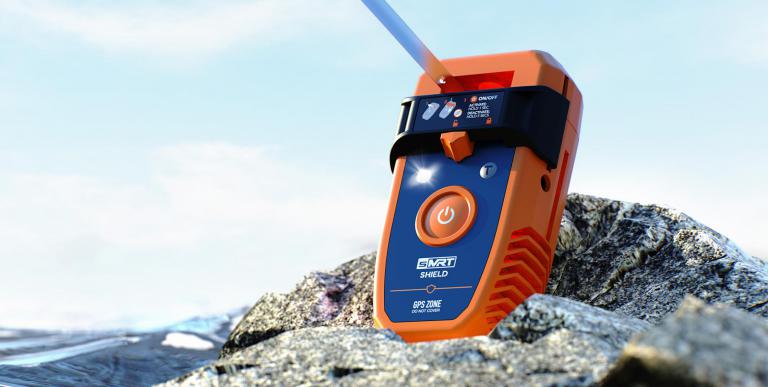
As a leader in "overboard" solutions for offshore operations and leisure use, MRT is committed to launching a new series of positioning beacons to support users to send timely distress signals anywhere in the world. The company collaborated with IDC's product design team in the UK on the design and development of one of the ground-breaking new devices. The device is defined as: it can automatically deploy the antenna in water emergency situations, maximize the transmission of signals through three different communication platforms, and at the same time can be used on land to become a truly global positioning beacon.
One of the main points of the design is to make the device more efficient and easy to use by understanding the user's interaction with the device in an emergency. Based on the research of existing products, the IDC team in the UK has identified the functions and features that need to be improved in case of emergency, including the combination of buttons, switches, sliders and joysticks.
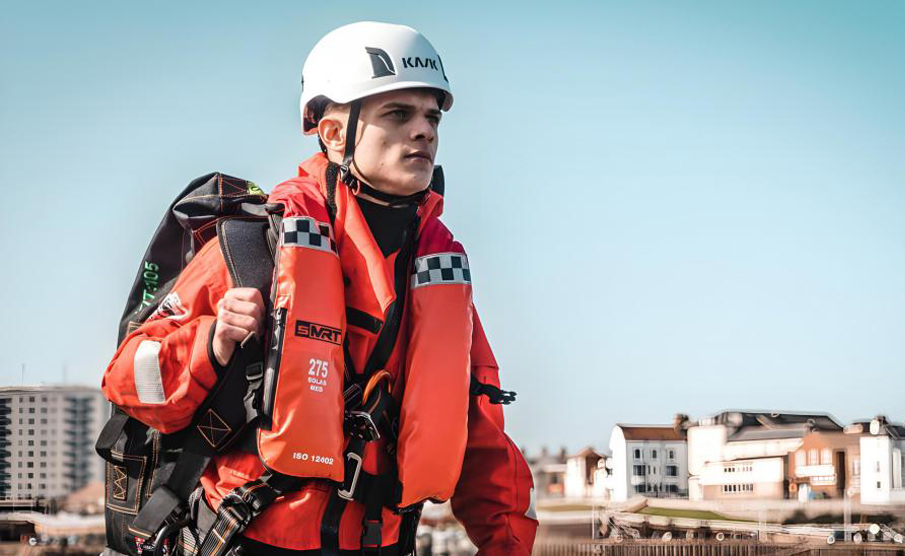
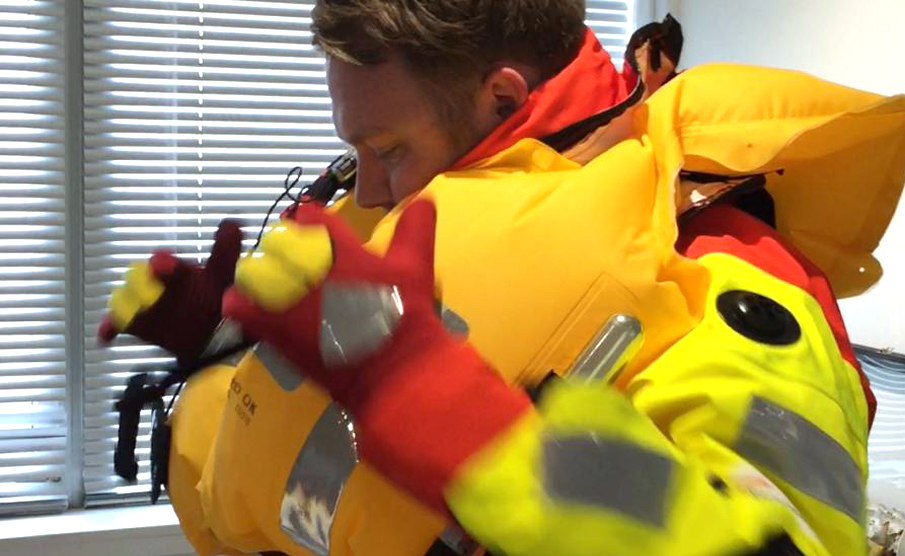
During the test, the team wore offshore work equipment (such as restricted movement, waterproof dry-suit with thick gloves) and inflated life jackets to simulate real-life scenarios, understand the size restrictions and operational flexibility when operating the equipment, and perform motion analysis to determine how users can reach and operate the controls.
Since the automatic deployment of the antenna under water is a key requirement for new equipment, the usability study also helps to understand the optimal positioning of the antenna when the equipment is attached to the inflatable life jacket.
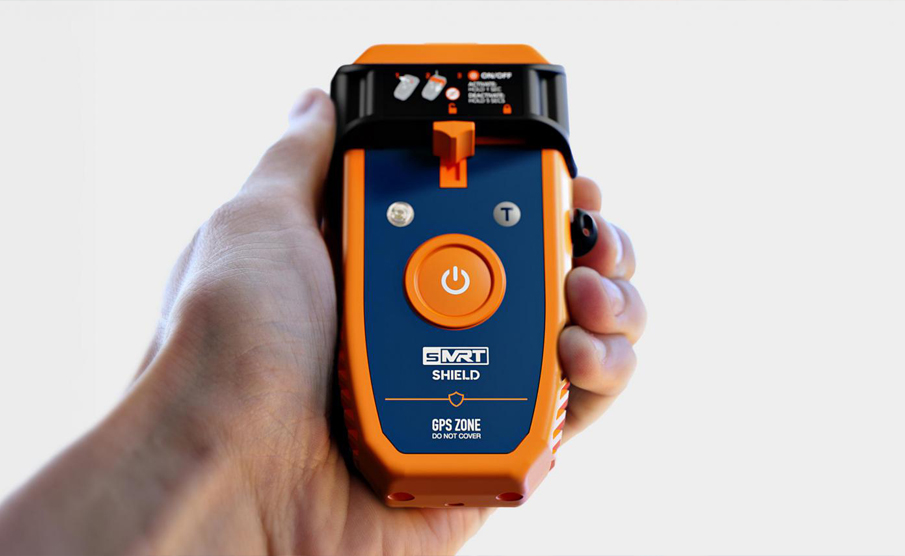
In order to avoid accidental signal transmission and timely product activation in an emergency, the team designed a two-step activation and start-up process that was simplified to one hand for quick activation.
Drawing on insights from usability studies, the team designed two different ways to activate signal transmission for land and overboard situations.
The land emergency scenario is for the user to manually slide the slider to power up the device, thereby manually releasing the antenna, and then pressing the button for one second to activate the device.
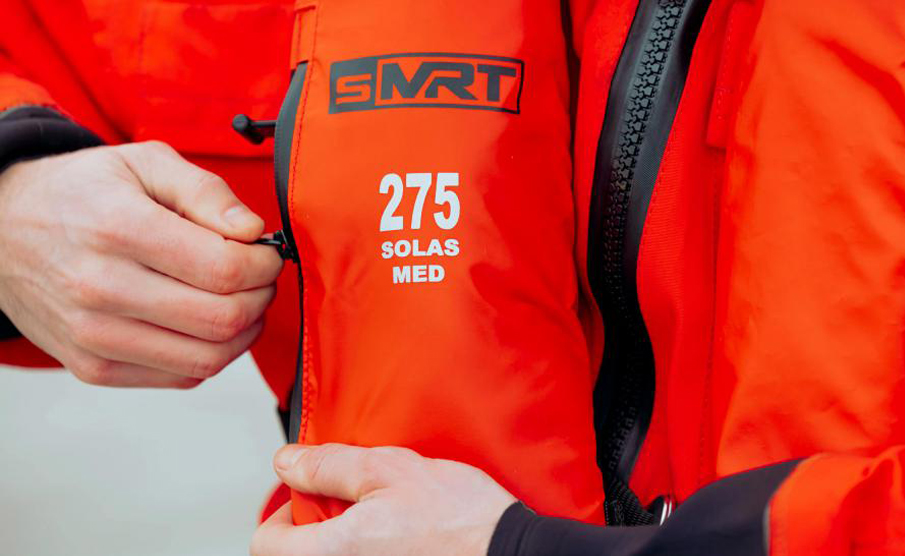
In the case of "person overboard", the device needs to automatically deploy the antenna. The usability study shows the positioning position of the antenna to obtain the best transmission effect after installation. The difference between the device and the land version is that it contains an activation pull tab, which is connected to the life jacket by a rope. When the life vest is inflated, the cord pulls the pull tab to release the antenna.
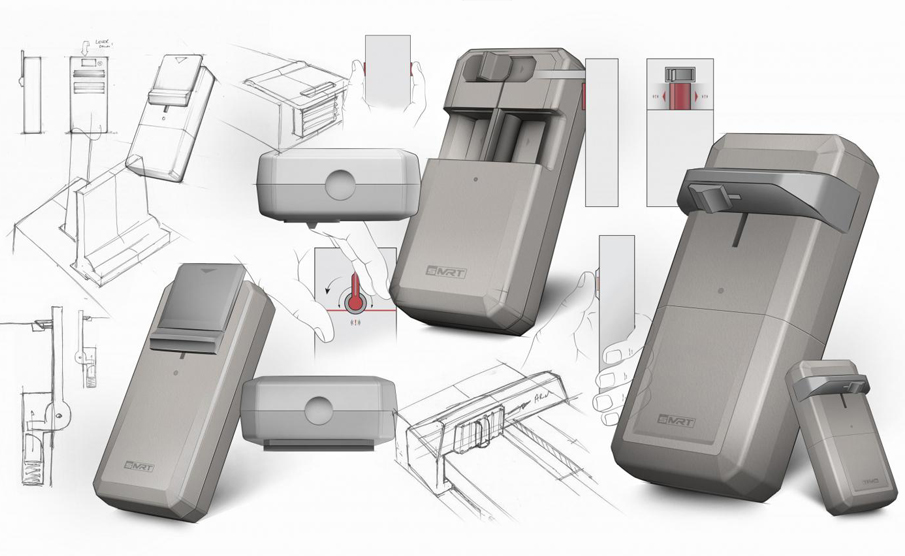
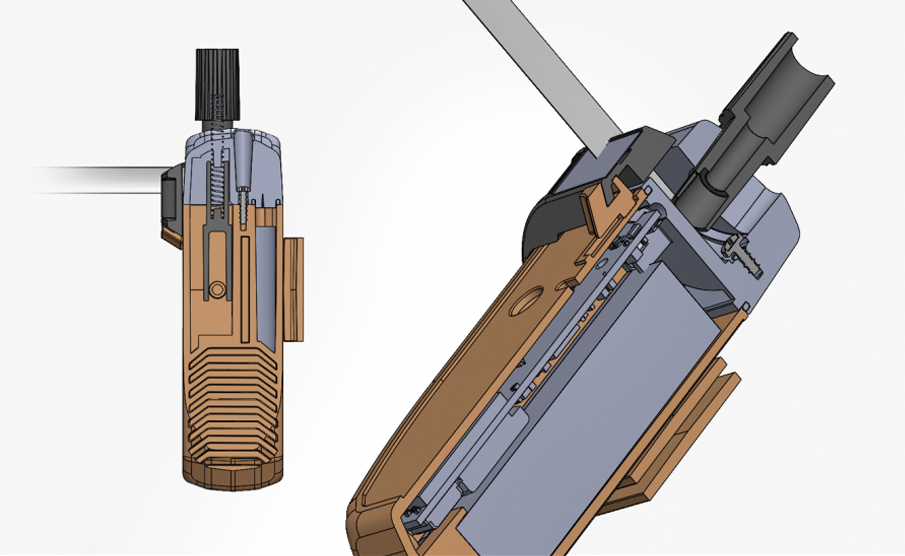
Engineers at IDC in the UK developed this automatic antenna deployment mechanism. A flexible metal antenna is wound in a spring structure. When the life jacket is inflated, the activation pull tab is pulled to trigger the spring structure to release, so that the antenna is vertically deployed.
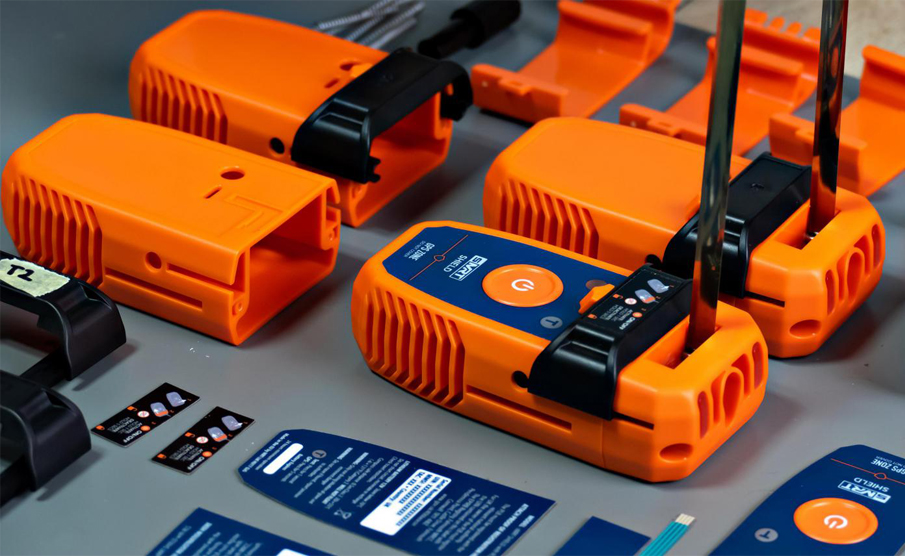
The choice of materials is one of the elements to achieve product performance. They must be able to withstand various temperatures and pressures and meet the protection level requirements. The main body of the equipment is made of PC-ABS material, and the external slider components powered on the equipment are made of POM, which has low friction, high wear resistance and dimensional stability. The team developed it to IP68 protection.
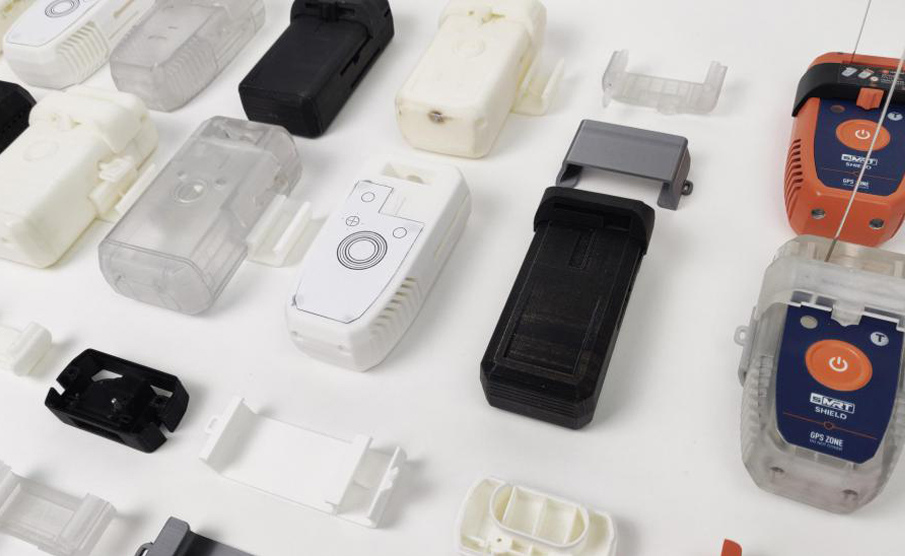
The team produced a large number of prototypes and conducted pressure, drop tests and water resistance evaluations until they were satisfied with the strength and robustness of the seal.
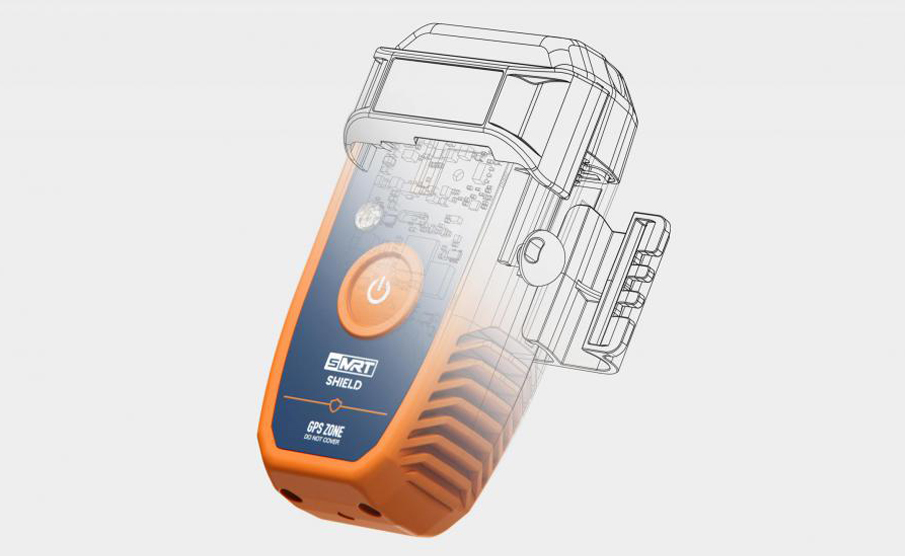
The visual language conveys a practical design concept and meets the needs of users. The activation buttons are large and clear, and a tactile membrane keyboard is used on the front. User guidance flowcharts have been added on the front of the device as an additional visual aid for land operations.
The UK IDC team considered manufacturing-oriented design throughout the design development process and applied tolerance stack analysis to ensure that all components work effectively in the final assembly.
UK IDC participated in the design and development of sMRT Shield:
• Availability analysis
• Competition analysis
• Industrial Design
• Mechanical Engineering
• Complete production-oriented 3D CAD design
• User testing and ergonomics
• Prototyping
• Tolerance stacking analysis
• Performance testing
• Material specification development
• Mold management and production support

本作品版权归 英国IDC产品设计 所有,禁止匿名转载及个人使用,任何商业用途均需联系原作者。

新用户?创建账号
登录 重置密码
请输入电子邮件以重置密码。


Very good
quite professional